
"SIAL China"
21780 article(s) found

Starbucks faces challenges: multi-coffee brands compete for the Chinese market, coffee is very popular
Multi-coffee brands compete for the Chinese market Starbucks faces challenges Starbucks is always a brand with no lack of topics. Recently, there are media reports in the United States, a Chicago woman sued Starbucks for $5 million because there were too many ice cubes in cold drinks. The news drew attention to Starbucks, which was widely questioned about its high pricing in China. There is more in one drink.

China and South Korea join forces to dominate China's coffee industry
In March 2012, coffee brand caffebene officially entered China and joined forces with China Enterprise Investment Group to establish Coffee Management Co., Ltd. South Korea dark horse, leading the Asian mainland, implementing the global strategy coffee accompany you CaffeBene is the leader of the Korean coffee chain industry, South Korea's local market share is 70%. In April 2008, the first door was opened in Qingtan Cave, South Korea.
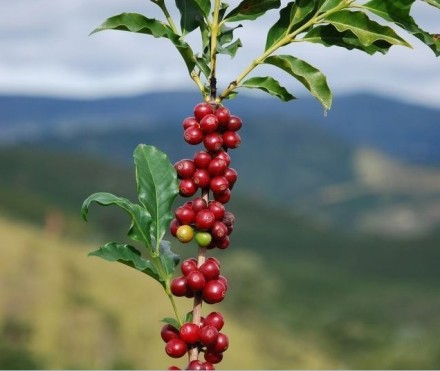
China's coffee to be exported will become a major global coffee production base.
As one of the coffee producing places, China's future development goal is to be on a par with Latin America, the global coffee production base, and to become the world's leading coffee producing country. However, this road of development is still long, and China has a long way to go to achieve this goal. The green plateau and endless tea gardens are the deepest impression of foreigners on China. China as the largest tea in the world

Does Yum sell coffee in China? Yum China and Italian coffee LAVAZZA will open 1000 coffee shops.
When it comes to selling coffee, Yum China is also ambitious. Yum China and LAVAZZA, the founder of espresso, have announced the opening of 1000 stores by 2025, according to media reports. Yum China and Lavazza have accelerated their expansion in the coffee market through a joint venture, and it is reported that the two sides will jointly inject US $200 million into the joint venture to provide funds for future development. In addition

When was coffee introduced into China? when did coffee become popular in China?
The history of the introduction of coffee into China is not long, and it was not until 1884 that coffee was first planted in Taiwan Province. In the mainland of the motherland, the earliest coffee cultivation began in Yunnan. At the beginning of the 20th century, French missionaries brought the first batch of coffee saplings to Binchuan County, Yunnan Province, and began to grow coffee in the mainland. Chinese people have been drinking tea for thousands of years.

Cultural Differences in Coffee Spreading and Development in China
The spread and development of coffee in China; Cultural differences between Chinese and foreign coffee cultures; Comparison of coffee cultures Coffee did not have a long history in China until 1884, when coffee was first planted successfully in Taiwan. On the mainland, the earliest coffee cultivation began in Yunnan. At the beginning of the 20th century, French missionaries brought the first coffee seedlings to Binchuan County in Yunnan Province, and coffee began to be planted on the mainland. From Nature

The amount of coffee consumed in China is about 200 billion yuan. Average annual consumption growth rate of 20%
Xiong Xiangren, Chinese president of the 26th World Coffee Science Congress, believes that the meeting to be held in Yunnan, China, is an affirmation by the coffee industry for the improvement of the comprehensive strength of China's coffee industry, and also marks that China will have a dialogue with the global coffee producing and consuming countries, which will play a positive role in improving the international status of China's coffee in the future. In addition, he also talked about the blowout era of Chinese coffee.

Analysis of China's Coffee Import and Export in 2011
China Business Intelligence Network News: the import of coffee in China is on the rise. According to the China Business Intelligence Network, in 2011, China imported 43000 tons of coffee, an increase of 41.9% over the same period last year. The import volume exceeded the US $100 million mark, reaching US $130 million, an increase of 84.4% over the same period last year. In 2011, China exported a total of 37900 tons of coffee, an increase of 15.2% over the same period last year, and the export value reached 180 million US dollars, compared with the same period last year.

China wants to export coffee to become a major global coffee production base
China's coffee production and consumption China believes it has enough strength to compete with the world's two largest coffee producers: Brazil and Colombia, which produce 5.12 million bags and 1.25 million bags (60kg each), respectively. These two countries account for more than 50% of global coffee production. Vietnam in Asia relies on the cultivation of robusta coffee (robusta).

China Coffee Network Coffee Development History of China Coffee Story of Yunnan, China
According to historical records, coffee trees were first planted in Taiwan in 1884, and coffee cultivation in mainland China began in Yunnan. In 1902, a French missionary named Tian introduced seeds from "Yingong" in Binchuan County, Yunnan Province. it was successfully planted in a place called Zhu Kula, a tributary of the Jinsha River.

The final of the 4th China barista skills Competition was held in Guangzhou.
Professional coffee knowledge exchange more coffee bean information Please follow Coffee Workshop (Wechat official account cafe_style) the fourth China barista skills Competition, the most professional national competition in the domestic coffee industry, was held in Sany International Food City in Guangzhou from the 27th to 28th. Nearly 100 excellent baristas from Hainan, South China, East China and Shandong competed together. Chinese barista

Introduction to the spread and Development Prospect of Coffee in China
The spread and development of coffee in China the history of coffee introduced into China is not long. It was not until 1884 that coffee was first planted in Taiwan Province of China. In the mainland of the motherland, the earliest coffee cultivation began in Yunnan. At the beginning of the 20th century, French missionaries brought the first batch of coffee saplings to Binchuan County, Yunnan Province, and began to grow coffee in the mainland. Chinese people already drink tea.
China Resources Bank is opening its third coffee bank in Shenzhen.
On June 30, Pacific Coffee Shop, a calm branch of China Resources Bank, officially opened.
Cafe Show China China International Coffee Exhibition
Founded in 2002, Seoul Coffee Fair is the first and only coffee exhibition in Asia to be recognized by the International Federation of exhibitions (UFI). It has become the largest exhibition in the coffee industry in Asia. In order to meet the fast-growing market demand of China, China Exhibition Group Beijing Huagang Exhibition Co., Ltd. joined hands with Korea's senior EXPORUM company to bring the world-renowned coffee show brand Cafe Show to China.

Starbucks responded to China's profiteering and self-rounding selling price is 10 times the cost of materials.
The price is nearly 10 times the cost of materials. Even the price of a mug made in China is nearly half more expensive than that in the United States. He Tianjiao, the price of a mug made in China is more expensive than that in the United States and other places. It is not only coffee that Starbucks sells Made in China mugs. After adding tariffs and transportation costs, the price in the United States is even cheaper than that in China. Travel to the United States during National Day holiday
Our association awarded Yunnan Pu'er the title of "Coffee Capital of China".
Yunnan Pu'er, the coffee capital of China, has become a coffee production area with the largest planting area, the highest yield and the best quality in China and the main distribution center of coffee trade. On December 10, 2012, the Coffee Bean Branch of China Fruit Circulation Association named Pu'er the coffee capital of China. Chairman Zhang Jincheng read out the document that approved Pu'er to be named the Coffee Capital of China on January 7, 2013.

Why does Starbucks prefer China? Open another 1.33 stores a day for the next five years.
Following Kaiping (Wechat official account vdailycom) found that Beautiful Cafe opened a small shop of its own, with 2800 stores all operating itself to 5000 in 2021. This is another growth story about the Chinese market. Starbucks spent 1.3 billion US dollars to take over the operation rights of all Starbucks stores in mainland China, which means that all Starbucks stores in mainland China will be owned by Starbucks.

Why can't Starbucks find a strong competitor in China?
Professional barista exchanges follow Coffee Workshop (Wechat official account cafe_style) China's Wanda is openly challenging Disney; Uber has invested 2 billion dollars against DiDi; Adidas has been fighting Li Ning and Anta for many years; Apple is playing against a number of emerging competitors in China (Xiaomi, Huawei, Oppo, etc.). There is always a phenomenon in the

Within 10 years, China will become the third largest coffee consumer market.
Coffee is an international commodity second only to crude oil, while the quality of Yunnan coffee beans, which accounts for 99% of China's coffee production, is comparable to that of high-quality coffee produced at high elevations in Central America. As Yunnan, which has excellent raw materials, the sales of coffee are not satisfactory. Looking at China, there are few local brands, and the output and sales of coffee in China are similar to those in the main coffee producing areas and major coffee producing areas in the world.

When was coffee introduced into China? coffee development in China
In terms of natural conditions, many parts of China are very close to Latin America, South America, India, Indonesia and other places, with the congenital conditions of coffee cultivation, but the traditional culture and customs restrict the development of coffee in China. It was not until recent years that coffee was grown as more coffee entered the lives of ordinary Chinese people and with the impact of foreign culture and way of life.